Navigating PDA Technical Report No. 79: Particulate Matter Control in Difficult-to-Inspect Parenterals
Visual inspection is a critical quality control step in pharmaceutical manufacturing, ensuring that parenteral products are essentially free of visible particles. While standard solutions in clear glass containers present straightforward inspection scenarios, the industry increasingly relies on complex formulations and novel packaging systems. To address the unique challenges posed by these products, the Parenteral Drug Association (PDA) published Technical Report No. 79 (TR79): Particulate Matter Control in Difficult to Inspect Parenterals in 2018. This purchased industry guidance document provides a comprehensive framework for managing particulate matter in products where traditional visual inspection methods fall short.
For QA managers and quality professionals, understanding and implementing the principles outlined in PDA TR79 is essential for maintaining compliance and ensuring patient safety. This article explores the core concepts of TR79, focusing on its lifecycle management approach, inspection methodologies, and strategies for handling Difficult-to-Inspect Parenterals (DIPs).
Understanding Difficult-to-Inspect Parenterals (DIPs)
PDA TR79 specifically targets Difficult-to-Inspect Parenterals, which are products or container-closure systems that obscure or complicate the visual detection of particulate matter. Standard inspection conditions, such as those outlined in USP <790>, may not be sufficient for these products. DIPs encompass a wide range of product types and packaging formats, including:
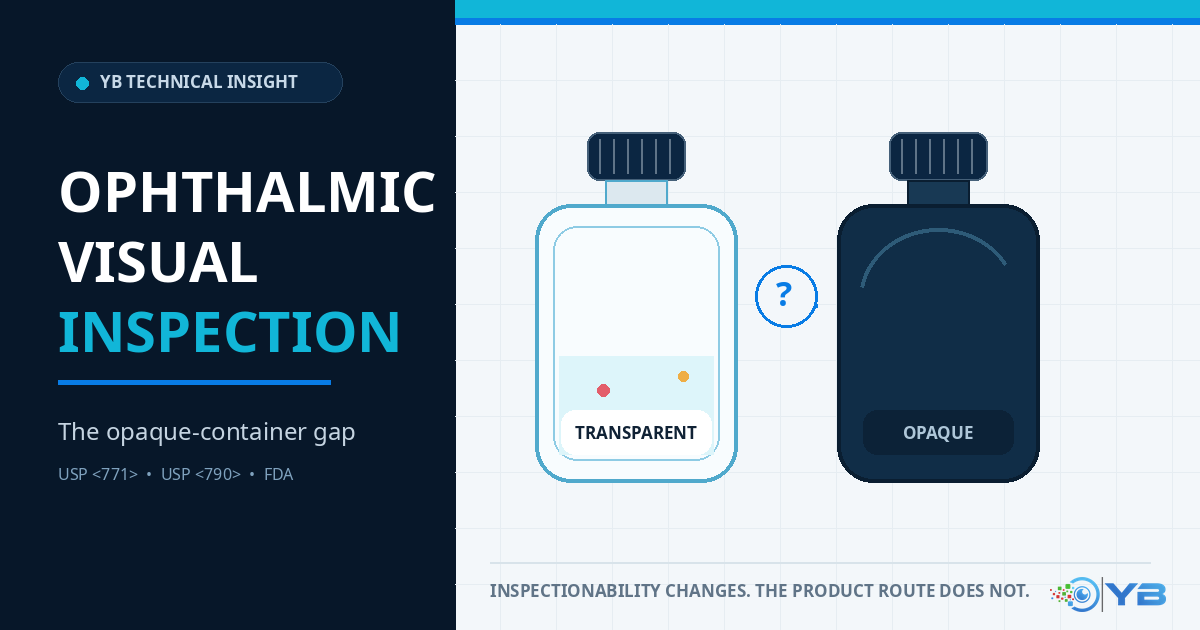
- Opaque or deeply colored solutions: High-concentration formulations or products with inherent coloration that mask the presence of particles.
- Lyophilized cakes and powders: Solid products where particles may be hidden within the matrix or obscured by the container walls.
- Concentrated suspensions and emulsions: Formulations with high turbidity or viscosity that hinder particle movement and visibility.
- Plastic syringes and blow-fill-seal (BFS) packaging: Containers with varying optical clarity, wall thickness, or surface textures that distort visual inspection.
- Flexible bags, specialty containers, and medical devices: Complex packaging systems that present unique geometric or material challenges.
The primary challenge with DIPs is that the probability of detection (PoD) for visible particles is inherently lower than for clear solutions in glass vials. TR79 acknowledges this limitation and provides strategies to mitigate the risk of releasing non-conforming products.
The Lifecycle Management Approach
A central theme of PDA TR79 is the application of a lifecycle management approach to particulate matter control. Rather than relying solely on end-product inspection, TR79 emphasizes that quality must be built into the product from the earliest stages of development through commercial manufacturing. This holistic strategy involves:
- Defect Prevention: Implementing robust controls over active pharmaceutical ingredients (APIs), raw materials, containers, closures, equipment, formulation, and filling processes to minimize the introduction of particles.
- Process Understanding: Characterizing the product and its packaging to identify potential sources of particulate matter and understand how they interact with the inspection process.
- Continuous Improvement: Utilizing data from inspection results, defect classification, and trending to drive process enhancements and reduce particulate loads over time.
By adopting a lifecycle approach, manufacturers can shift their focus from merely detecting defects to actively preventing them, thereby improving overall product quality and reducing reliance on visual inspection as the sole quality gate.
Methods for Routine 100% Visual Inspection
Despite the challenges posed by DIPs, routine 100% visual inspection remains a fundamental requirement. TR79 provides guidance on adapting standard inspection methods to accommodate the specific characteristics of these products. This nondestructive inspection must be carefully designed and qualified to maximize the probability of detection.
For DIPs, standard inspection conditions (e.g., 2,000-3,750 lux, black and white backgrounds) may need to be modified. TR79 discusses the use of enhanced methods for revealing visible particles, which may include:
- Extended Dwell Time: Increasing the duration of the inspection to allow particles more time to settle or become visible, particularly in viscous solutions or suspensions.
- Brighter Illumination: Utilizing higher light intensity (e.g., 8,000-10,000 lux for certain plastic containers) to penetrate opaque or colored solutions and improve contrast.
- Specialized Lighting Angles: Adjusting the angle of illumination to highlight particles against the background or within the product matrix.
- Magnification: Employing magnifying lenses or camera systems to enhance the visibility of smaller particles, although this must be carefully controlled to avoid increasing false reject rates.
- Settling: Allowing the product to rest before inspection to allow particles to settle to the bottom of the container, where they may be more easily detected.
It is crucial to note that any modifications to standard inspection conditions must be scientifically justified and rigorously qualified.
Inspection Method Qualification
Qualifying the visual inspection method for DIPs is a critical step in demonstrating its effectiveness. TR79 emphasizes the importance of using representative test sets that accurately reflect the product, container, and expected defect types. The qualification process should establish the baseline probability of detection for the specific DIP and demonstrate that the chosen inspection parameters are appropriate.
Key considerations for qualification include:
- Defect Library: Creating a comprehensive library of characterized defects, including extrinsic, intrinsic, and inherent particles, specific to the product and process.
- Test Set Design: Developing test sets that include a statistically significant number of good and defective units, with defects representing the range of sizes and types expected in production.
- Inspector Training: Ensuring that inspectors are specifically trained on the unique characteristics of the DIP and the modified inspection procedures.
- Performance Monitoring: Continuously monitoring inspector performance and method effectiveness through regular requalification and trending of inspection data.
Acceptance Sampling and Testing
In addition to 100% routine inspection, TR79 outlines strategies for acceptance sampling and testing to verify the effectiveness of the inspection process and ensure batch quality. This involves both nondestructive and supplemental destructive testing.
Nondestructive Acceptance Sampling
Nondestructive acceptance sampling, often referred to as AQL (Acceptable Quality Limit) testing, involves inspecting a statistically representative sample of the batch after the 100% inspection. This step provides an additional layer of assurance and helps verify that the 100% inspection process is functioning correctly. For DIPs, the AQL inspection should utilize the same enhanced methods and qualified inspectors as the routine inspection.
Supplemental (Destructive) Acceptance Sampling
Because the probability of detection for DIPs is inherently lower, TR79 recommends the use of supplemental destructive testing to provide a more accurate assessment of particulate matter. Destructive testing involves opening the container and examining the contents using methods that offer higher sensitivity than visual inspection.
Examples of destructive testing methods include:
- Filtration and Microscopic Examination: Filtering the product and examining the filter membrane under a microscope to identify and count particles.
- Reconstitution and Inspection: For lyophilized products, reconstituting the cake with a clear diluent and inspecting the resulting solution under standard or enhanced conditions.
- Transfer to Clear Containers: Transferring opaque or deeply colored solutions to clear glass containers for inspection.
Destructive testing provides valuable data on the actual particulate load of the batch, which can be used to validate the effectiveness of the nondestructive inspection and inform continuous improvement efforts.
Defect Classification and Monitoring/Trending
Effective particulate matter control requires a robust system for classifying defects and trending inspection data. TR79 emphasizes the importance of categorizing defects based on their source and potential impact on patient safety.
Common defect categories include:
- Extrinsic (Exogenous): Particles originating from outside the manufacturing process, such as hair, non-process fibers, or insect parts.
- Intrinsic: Particles originating from within the manufacturing process or container-closure system, such as stainless steel, glass, elastomers, or silicone.
- Inherent: Particles that are a natural characteristic of the product formulation, such as protein aggregates or product-related precipitates.
By accurately classifying defects, manufacturers can identify the root causes of particulate contamination and implement targeted corrective and preventive actions (CAPAs). Trending rejection rates and defect types over time is essential for detecting process drift, evaluating the effectiveness of CAPAs, and driving continuous improvement.
Regulatory Context and Industry Guidance
It is important to recognize that PDA TR79 is an industry guidance document, not a binding regulation. However, it represents current industry best practices and provides a scientifically sound approach to managing particulate matter in DIPs. Regulatory agencies, such as the FDA, expect manufacturers to employ appropriate and scientifically justified methods for visual inspection, and TR79 offers a valuable framework for meeting these expectations.
While pharmacopeial chapters like USP <790> define the baseline requirements for visual inspection (e.g., "essentially free" of visible particles and an AQL of 0.65%), TR79 provides the necessary guidance for applying these principles to complex products where standard methods are insufficient. By aligning their inspection programs with the principles of TR79, manufacturers can demonstrate a proactive and scientifically rigorous approach to quality control.
Practical Takeaways for Quality Professionals
Implementing the recommendations of PDA TR79 requires a strategic and multidisciplinary approach. Quality professionals should consider the following practical takeaways:
- Assess Your Portfolio: Identify products within your portfolio that qualify as DIPs and evaluate the effectiveness of current inspection methods.
- Embrace the Lifecycle Approach: Shift the focus from end-product inspection to defect prevention by implementing robust controls throughout the manufacturing process.
- Optimize Inspection Methods: Explore enhanced inspection methods, such as extended dwell time or specialized lighting, and rigorously qualify these modifications.
- Implement Supplemental Testing: Utilize destructive testing methods to gain a more accurate understanding of the particulate load in DIPs and validate the effectiveness of nondestructive inspection.
- Leverage Data: Establish a robust system for defect classification and trending to identify root causes, monitor process performance, and drive continuous improvement.
By integrating the principles of PDA TR79 into their quality management systems, pharmaceutical manufacturers can enhance their ability to control particulate matter in Difficult-to-Inspect Parenterals, ensuring compliance with regulatory expectations and, most importantly, safeguarding patient health.