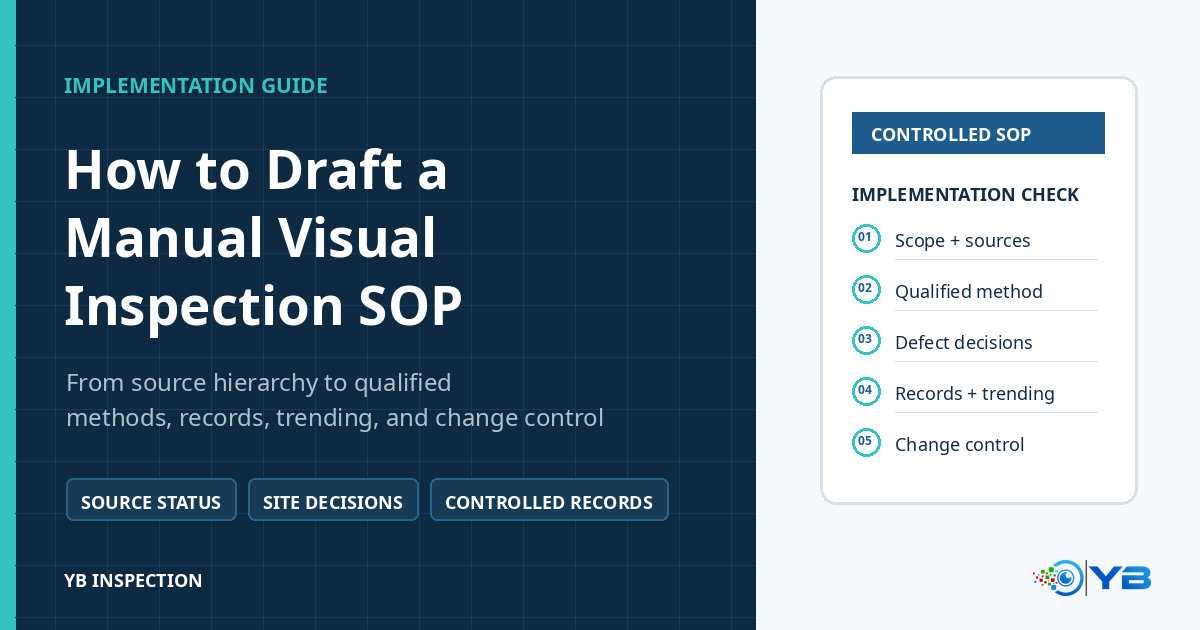
What Is a Knapp Test?
A Knapp test (also called a Knapp study) is a statistical method used to qualify visual inspectors in pharmaceutical manufacturing. Named after Julius Z. Knapp, who developed the methodology, it compares an individual inspector's detection performance against the consensus results of an expert panel to determine whether the inspector meets qualification criteria.
The Knapp test is the industry-standard methodology referenced in USP <1790> for inspector qualification and is widely accepted by regulatory agencies including the FDA and EMA.
Why Knapp Testing Matters
Visual inspection is inherently subjective — different inspectors may have different detection thresholds, attention patterns, and decision-making criteria. Without a standardized qualification method, there is no objective way to ensure that all inspectors perform at an acceptable level.
Knapp testing provides:
- Objective qualification criteria — Pass/fail decisions based on statistical comparison, not subjective judgment
- Regulatory compliance — Demonstrates to inspectors that your qualification program meets USP <1790> expectations
- Performance benchmarking — Identifies inspectors who may need additional training
- Documentation — Creates auditable records of inspector capability
How the Knapp Test Works
Step 1: Establish the Expert Panel
An expert panel (typically 3–5 experienced inspectors) independently inspects a characterized test set multiple times. Their consensus results establish the "truth" — the expected detection rates for each defect in the test set. A defect is considered "detectable" if the expert panel detects it at or above a predetermined rate (typically ≥75% of inspections).
Step 2: Inspector Challenges the Test Set
The inspector being qualified inspects the same characterized test set under the same conditions used by the expert panel. Their results are recorded for each individual container.
Step 3: Statistical Comparison
The inspector's detection rate is compared against the expert panel's consensus. The original Knapp methodology uses a one-sided statistical test to determine whether the inspector's performance is significantly worse than the expert panel's.
Step 4: Pass/Fail Determination
The inspector passes if their detection rate meets the predetermined acceptance criteria relative to the expert panel. Common acceptance criteria include:
- Detection rate ≥ a specified percentage of the expert panel's rate (e.g., ≥70%)
- No critical defects missed (zero-tolerance for certain defect categories)
- False reject rate within acceptable limits
Test Set Requirements
A valid Knapp test requires a properly characterized defect test set. The test set must include:
- Known defects: Containers with characterized, documented defects of varying types and sizes
- Good units: Containers confirmed to be defect-free (to assess false reject rates)
- Range of difficulty: Easy, moderate, and challenging defects to differentiate inspector capability levels
- Sufficient quantity: Enough units to achieve statistical significance (typically 200+ containers)
- Traceability: Full documentation of defect type, size, and location for each container
This is where characterized defect test kits from YB Inspection become essential. Our kits are specifically designed for Knapp testing with fully documented defects, appropriate difficulty distribution, and complete traceability documentation.
Common Pitfalls in Knapp Testing
- Inadequate test set size: Too few containers leads to insufficient statistical power
- Poorly characterized defects: If defects are not properly documented, results cannot be interpreted
- Inconsistent conditions: Expert panel and inspectors must use identical inspection conditions
- Degraded test sets: Defects can change over time — regular recharacterization is essential
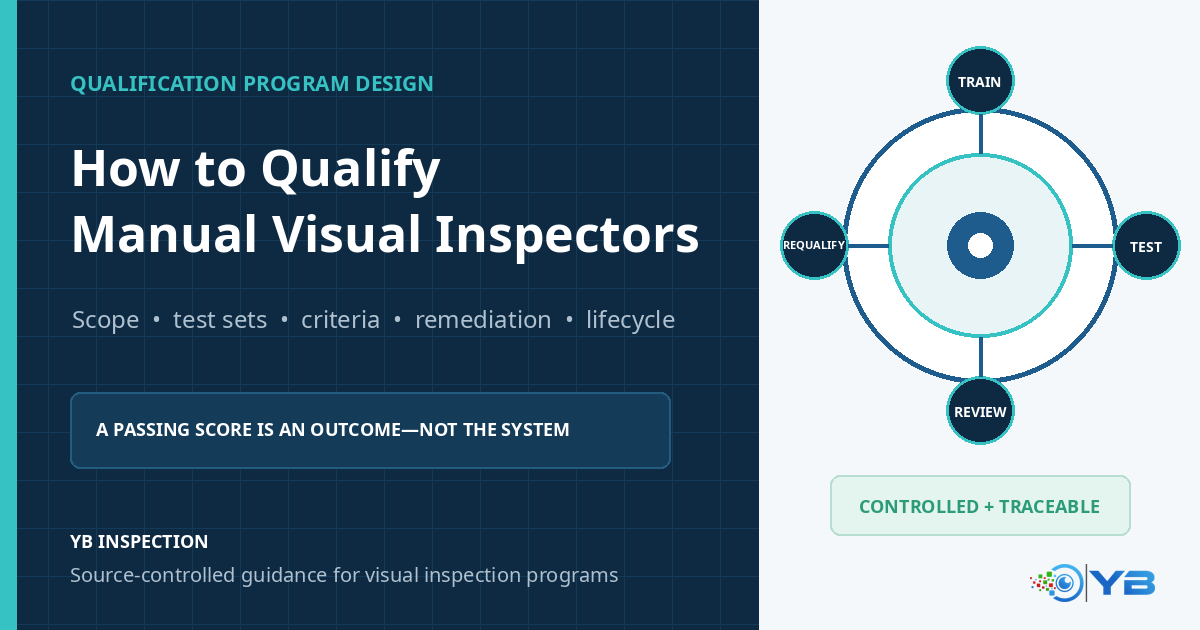
- Single-point qualification: Qualification should be repeated periodically, not just at initial training
Requalification Frequency
Industry best practice and regulatory expectations suggest requalification at least annually, with more frequent testing for:
- New inspectors (at 30, 60, and 90 days after initial qualification)
- Inspectors returning from extended absence
- After significant changes to inspection conditions or equipment
- When trending data suggests performance drift
Beyond Knapp: Probability of Detection
While Knapp testing qualifies individual inspectors, Probability of Detection (PoD) studies assess the overall inspection system's capability. PoD studies use similar characterized test sets but focus on determining the detection probability for specific defect types and sizes across the entire inspection operation — including all qualified inspectors, equipment, and conditions.
Getting Started with Knapp Testing
To implement a Knapp testing program, you need:
- Characterized defect test kits appropriate for your products and container formats
- A qualified expert panel (or access to one)
- Documented procedures for test administration and scoring
- Statistical tools for result analysis
- A requalification schedule and trending system
YB Inspection provides characterized defect test kits designed specifically for Knapp testing, along with consulting support for program design and implementation. Contact us to discuss your inspector qualification needs.